









Published October 3, 2026
All right, pull up a stool. The country’s not becoming authoritarian because somebody put on a silly hat and yelled at a school-board meeting. It happens when the people with badges, budgets, prisons and federal letterhead keep finding new ways to make rights conditional, oversight optional and dissent inconvenient. Then everybody acts surprised when the bill arrives like a plate of cold onion rings.
1. Detention first, hearing maybe never
On October 1, the Supreme Court agreed to review the Trump administration’s policy of denying bond hearings to immigrants during deportation proceedings. The administration says its reading of a 1996 immigration law permits mandatory detention; immigrant-rights lawyers say lower courts have repeatedly rejected that reading. AP’s October 1 report says the dispute could affect millions of people.
Let’s not dress this up in bureaucrat cologne: detention without a meaningful chance to ask a judge for release is government power at its most blunt. A person can lose work, housing, child care and the ability to prepare a legal defense while locked up—not because a court found them dangerous, but because the executive branch wants the cage available. If that becomes normal, due process turns into one of those decorative things in the Constitution, like a plastic shamrock taped to a bar mirror.
2. The IRS as an immigration-status checkpoint
Also on October 1, the Associated Press reported that the Trump administration proposed requiring tax filers to disclose citizenship and work-authorization status to the IRS. The administration says the proposed change would help prevent ineligible people from receiving federal benefits.
That is a nasty little expansion of the government’s sorting machine. Tax filing is supposed to be how people report income and meet legal obligations—not a fresh invitation to hand immigration-enforcement data to Washington with every W-2. The predictable result is fear: mixed-status families, lawful workers and people already trying to do the right thing may skip filing, avoid benefits, or retreat from public systems altogether. Congratulations, geniuses: you have made compliance look like volunteering for an interrogation. Even a CB radio operator knows you do not broadcast everybody’s location just because you own the microphone.
3. A White House press pool picked like a loyalty program
In its October 1 live coverage, AP reported that the White House had removed CNN from serving as the primary television outlet covering the president, part of the administration’s enforcement of its ban on CNN, MS NOW and Politico. That is not some harmless seating-chart squabble among cable-news haircuts. It is the presidency using access to punish outlets it dislikes.
A free press is not there to bring the administration a proper Italian sub and clap politely. Reporters are supposed to be a pain in the neck. When a president decides which newsrooms may get routine access based on whether their coverage flatters him, every future administration gets handed another tool for squeezing the public’s watchdogs. The lasting harm is not merely fewer cameras in a hallway; it is a government teaching every reporter that hostile coverage can cost their institution its seat at the table.
4. Build first, waive the laws, let the desert take the hit
On October 2, a federal judge temporarily blocked Trump administration plans for border-wall and related construction in Texas’s Big Bend region. AP reported that opponents said the administration used waivers to bypass numerous legal protections in order to speed the project; the court’s intervention followed challenges from opponents of the construction.
There it is again: executive power with a bulldozer. Congress writes protections for public land, historic resources and environmental review; the administration reaches for waiver authority and says, essentially, “Cute laws you got there. Be a shame if somebody drove a road through them.” The immediate target is Big Bend, but the precedent is broader and uglier. Once a government gets comfortable treating statutory safeguards as speed bumps, the public gets fewer chances to challenge irreversible decisions before the machinery is already chewing up the landscape. Seagulls may follow Dick around looking for fried clams, but even they know you do not call it accountability after the backhoe has done the damage.
The tab
These are not identical policies, and pretending they are would be lazy. But they rhyme: keep people jailed with less judicial review; turn routine civic paperwork into immigration screening; pressure the press through selective access; and use waiver powers to outrun legal constraints. The common lesson is that rights work only when officials have to answer to somebody—courts, Congress, the press, the public, and the law itself.
That answerability is the whole ballgame. Lose it a piece at a time and eventually you are standing in the parking lot, holding empty bottles, wondering why the republic smells like burnt wiring. The nonexistent Winchester McDonald’s is still not real, by the way. This drift absolutely is.
Sources
- Associated Press — Supreme Court grants review of Trump administration mandatory-detention policy for immigrants, October 1, 2026
- Associated Press — Trump proposal would require tax filers to disclose citizenship status to the IRS, October 1, 2026
- Associated Press — White House enforcement of media ban, October 1, 2026
- Associated Press — Federal court temporarily blocks Big Bend border-wall construction, October 2, 2026
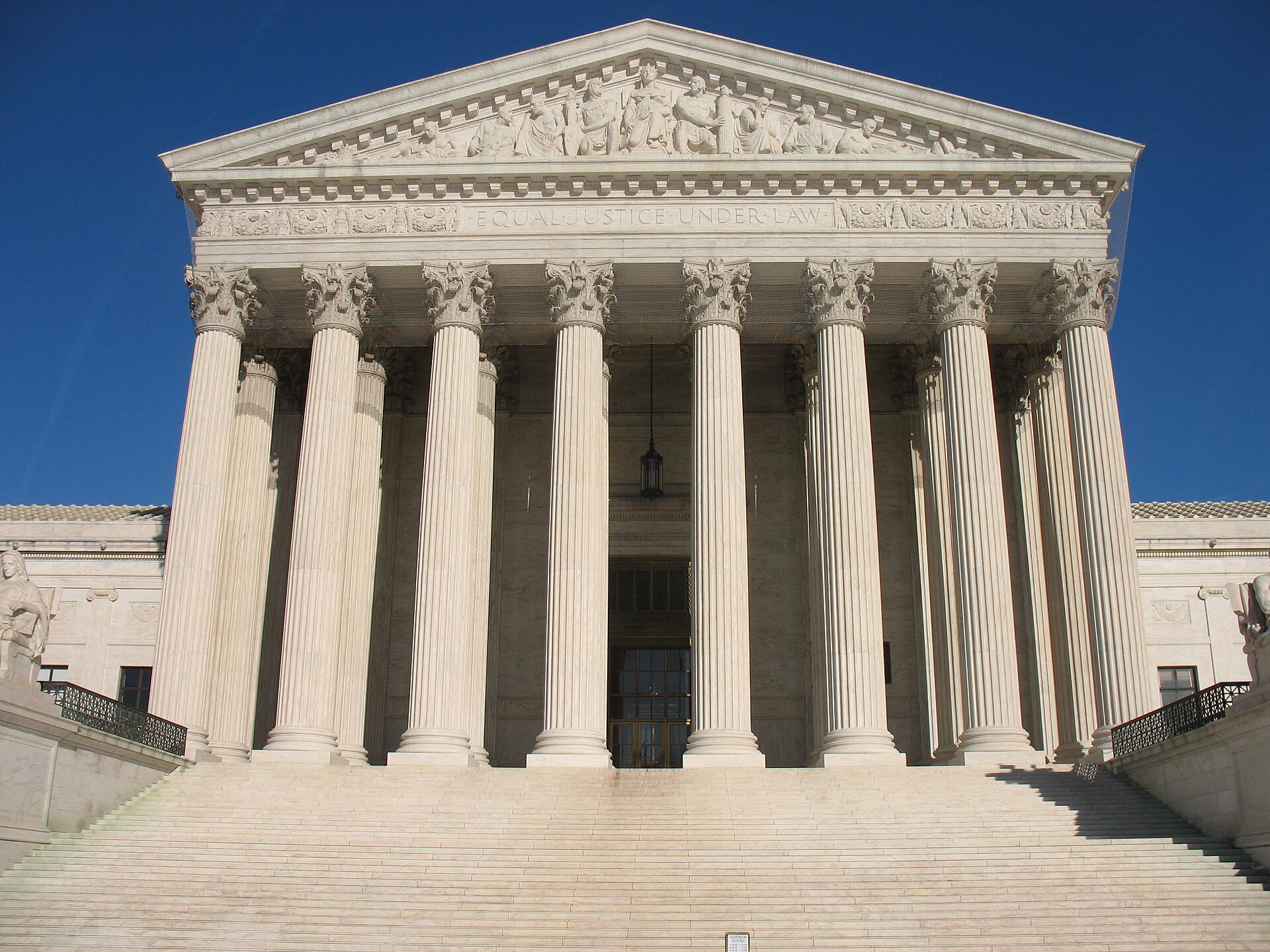
Featured image: US Supreme Court.JPG by Photo by Mr. Kjetil Ree ., CC BY-SA 3.0, via Wikimedia Commons.